

If you want to know how to start a lawn care business, begin with a focused local plan. Choose a small group of lawn care services, confirm your city and state requirements, assemble essential equipment, and contact nearby customers through referrals, local search, and direct marketing. Your first goal is not to serve every lawn; it is to win 10 customers you can serve reliably.
Industry data can indicate demand, but published figures require careful interpretation. GorillaDesk has reported survey findings from more than 80 American professionals, including an average annual income above $127,000. Treat that number as reported revenue or income data—not a guarantee—because results vary by region, pricing, route density, seasonality, expenses, and hours worked.
This guide explains each step: selecting services, researching local demand, estimating costs, buying equipment, arranging insurance, checking licensing, setting prices, and finding customers. You will also learn practical marketing methods for getting the first job and turning it into repeat business.
A lean launch may cost a few hundred dollars when you already have transportation and some tools, while a properly equipped business can require much more money. Start lawn care at a manageable scale, track every cost, and expand only when demand supports it.
Use the following takeaways to build a safer, more dependable care business:
Key Takeaways
- Choose a narrow lawn care offer and target 10 nearby customers.
- Verify licensing, insurance, and other local requirements before accepting work.
- Buy only the equipment needed for your first route.
- Use referrals, local search, and neighborhood marketing to find prospects.
- Deliver consistent service and request reviews to create repeat revenue.
How to Start a Lawn Care Business With a Clear Service Plan
The first step in starting lawn care is choosing one dependable service offer before buying expensive equipment or looking for clients. A focused plan makes pricing easier, limits travel, and helps you deliver consistent work. Start lawn care with services that match your budget, schedule, skills, and local demand, then expand as your lawn care business gains customers.
Choose Between Mowing and Full Lawn Care Services
For most new operators, mowing is the simplest starting service. A basic mowing package can include cutting, edging, trimming, blowing, and cleanup. You can later add broader lawn care services such as fertilizing, aeration, overseeding, weed control, leaf removal, or seasonal maintenance. Before offering pesticide, insect, or chemical treatment, check state and local licensing rules; training, an applicator license, and specialized insurance may be required. Add landscaping only after you have the skills, equipment, and coverage to complete that work safely. When a customer needs pest control beyond your scope, refer them to local pest specialists.
Define Your Ideal Local Customers
Choose the property types, lot sizes, service frequency, travel distance, and target price that fit your route. Residential lawns are often suitable for part-time work, while larger recurring properties may support a full-time business with a truck, trailer, and commercial mower. Before buying major equipment, speak with 10–20 local homeowners or request comparable quotes to validate demand.
- Micro model: existing transportation, a push mower, two fuel containers, a string trimmer, and basic safety tools for a small route.
- Part-time model: approximately $500–$1,500 in tools and equipment, excluding the vehicle; revenue depends on pricing, hours, season, and booked work.
- Expanded model: add aeration, tree service, power raking, or landscaping only after reliable results, proper training, and sufficient insurance.
| ModelTypical setupBest fit | ||
| Micro | Existing vehicle and basic equipment | Small residential lawn routes |
| Part-time | $500–$1,500 initial tool investment | Evening or weekend customers |
| Full-time | Truck, trailer, and commercial mower | Larger recurring properties |
Research Your Local Lawn Care Market and Competition
Market research helps a lawn care business decide which services to offer, what customers may pay, and where to find new customers before spending money on equipment or marketing. National figures can show that the lawn care industry is large, but your local demand, competition, season, and route density determine whether starting lawn care is practical in your area.

Identify Neighborhood Demand and Service Gaps
Define a service radius, such as 10–15 miles, then map nearby streets, count suitable properties, review local search listings, and compare competitors’ services and prices. A hypothetical small town with 1,300 lawns and one provider for every 134 lawns may indicate an opportunity, but treat those figures as an example, not a universal market rule.
- Mark lawns that appear to need regular mowing, cleanup, or seasonal maintenance.
- Record competitor signs, reviews, response times, services, and publicly listed prices without making unsupported claims.
- Ask residents or property managers which services receive poor follow-up, then identify a specific way to serve them better.
Set Practical Revenue and Workload Goals
Convert your income target into weekly jobs and include travel time, fuel costs, equipment wear, weather delays, and realistic work hours. A simple estimate is: weekly revenue = number of jobs × average price × visits per month ÷ 4. Recurring mowing can provide predictable work, while seasonal services vary by region. Do not assume a tree-spraying figure such as $2,000–$3,000 per worker per day is profit; verify the source, location, licensing rules, and whether it represents gross revenue before adding that service.
| GoalPlanning focusUseful measure | ||
| Local demand | Nearby properties | Illustrative: 1,300 lawns |
| Competition | Provider coverage | Illustrative: 1 per 134 lawns |
| Weekly revenue | Jobs, price, and visit frequency | Track actual results |
Build a Lean Lawn Care Business Budget
Protect cash flow before buying equipment for your lawn care business. Startup costs can range from a few hundred dollars for basic tools to many thousands for a truck, trailer, commercial mower, and expanded services. Published equipment prices as high as $70,000 may describe a complete or commercial setup, not a typical beginner launch. Match spending to your route size, service plan, available money, and realistic workload.
Estimate Equipment, Fuel, Software, and Marketing Costs
Separate one-time purchases from monthly operating costs. Your startup budget may include registration, license fees, insurance, a mower, trimmer, blower, fuel containers, hand tools, safety gear, vehicle or trailer, and initial marketing. Ongoing costs include fuel, blades, repairs, maintenance, uniforms, disposal, software, payment processing, and insurance. A mower may cost about $250–$4,000, while a trailer may cost $1,000–$5,000, but verify current retail and used-equipment prices in your area.
- Conservative: Use an existing vehicle and basic equipment for mowing a small residential route. Keep emergency cash available for fuel, repairs, and slow weeks.
- Moderate: Invest in midrange equipment, a used trailer, route software, insurance, and local marketing after confirming customer demand.
- Expansion: Buy commercial mowers, a truck, and specialized tools only when recurring jobs cover the added costs. Add landscaping services after reviewing training and insurance needs.
Set a Profitable Minimum Job Price
Use this pricing formula before quoting a job: minimum price = labor time + travel and fuel + materials and disposal + equipment wear + overhead + desired profit. Include loading, setup, payment fees, and trimmer time rather than pricing only by lawn size. Gross revenue is the money collected; profit is what remains after business costs. Track actual field time, fuel, and results for your first five to 10 jobs, then review margins and update pricing. Scheduling and invoicing software such as GorillaDesk may help organize work, but verify current features and costs before subscribing. Reserve funds for insurance and any required local license.
Choose Essential Lawn Care Equipment and Tools
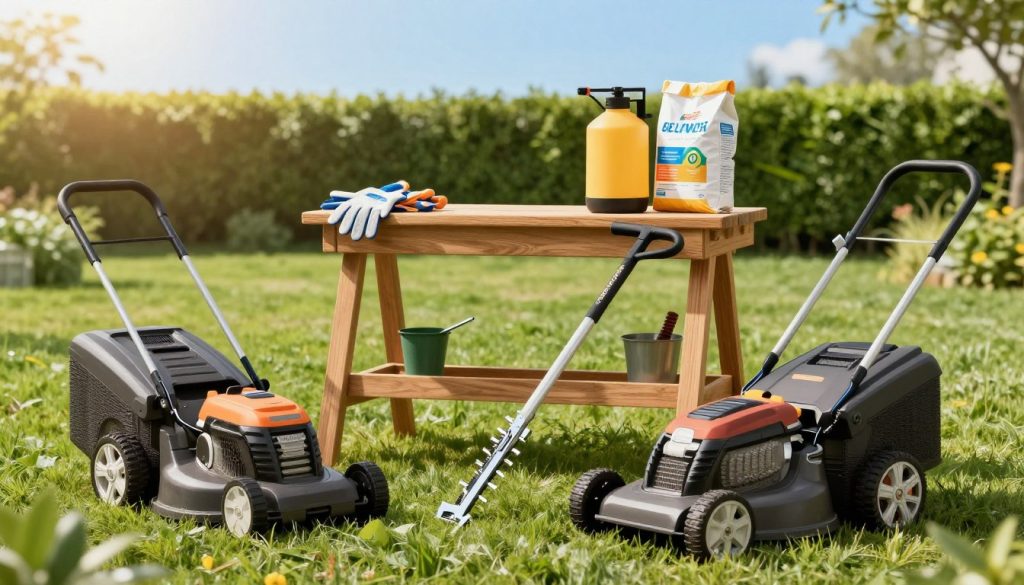
Reliable lawn care equipment keeps residential routes moving and protects your first lawn care business investment. Start with the tools needed for mowing and routine maintenance, then add specialty equipment for landscaping or other services only when customer demand supports the cost.
Start With a Mower, Trimmer, Blower, and Safety Gear
For basic mowing work, prioritize a dependable mower, string trimmer, blower, fuel container, hand tools, collection bags, spare line, replacement blades, and personal protective equipment. A mower may cost about $250–$4,000, while a trimmer and blower may each cost $80–$300; verify current local prices because costs vary by brand, power source, and condition.
- Choose eye protection, hearing protection, gloves, long pants, and sturdy, slip-resistant footwear.
- Carry spare trimmer line, blades, bags, a tire gauge, and basic repair tools on every service route.
- Match mower deck size and trimmer reach with lawn access, gates, obstacles, property size, and route density.
Decide When to Buy Used or Commercial Equipment
Walk-behind mowers generally suit small lawns and narrow access points. Stand-on and zero-turn mowers can make mowing faster on larger properties, but they require more money, transport capacity, storage, and maintenance. Riders, front-mowers, garden tractors, and robotic mowers are specialized options rather than essential tools for most new operators.
Before buying used equipment, inspect service records, engine or battery condition, deck and blade damage, safety features, operating hours, parts availability, and evidence of leaks or unusual noise. A trailer may cost $1,000–$5,000, so confirm that its capacity matches your mower and transport needs. Battery equipment may reduce noise and routine maintenance but depends on charging time and battery runtime; gas equipment may provide longer continuous work but requires fuel storage and more engine maintenance. Rent unfamiliar equipment before buying it, and purchase commercial equipment only after recurring service demand can support the added costs.
Handle Lawn Care Licensing, Insurance, and Business Setup
Before starting lawn care, confirm the rules that apply to your business. City, county, and state requirements may cover registration, zoning, taxes, signage, vehicle use, pesticide applications, and a local license. Requirements vary by location and by the services you provide, so check official government sources before serving customers. An accountant or attorney can explain business and tax issues, while an insurance agent can recommend appropriate coverage.
Select a Business Structure and Register Your Company
Your business structure affects taxes, records, administrative work, and personal liability. A sole proprietorship is often simple to establish, but it may expose personal assets to certain business claims. A partnership can divide duties and tax responsibilities among owners. An LLC may help separate company debts from personal property, but it does not guarantee protection from every liability claim and requires ongoing compliance. A corporation may suit a larger team or outside investment but generally involves more formal records and filings.
Register the chosen structure with the appropriate state office and obtain an EIN when required. Your compliance checklist may include business registration, tax registration, a local license, zoning approval, pesticide certification, written customer contracts, vehicle requirements, insurance, and accurate financial records. Federal reporting rules, including requirements associated with the Corporate Transparency Act and FinCEN, have changed and may depend on the entity and its status. Verify current guidance directly with FinCEN rather than relying on outdated deadlines or penalty amounts.
Protect Your Work With General Liability Insurance
General liability insurance can help address covered claims involving bodily injury or property damage, such as equipment damaging a customer’s window. Premiums vary by location, limits, services, claims history, and business size, so do not treat a $100 monthly estimate as a guaranteed cost. Ask about workers’ compensation, commercial auto, equipment and tools coverage, and specialized pesticide insurance before accepting services. Review exclusions and limits with an agent to protect your lawn care business and care business responsibly.
Create Lawn Care Services and Pricing Customers Understand
Clear service packages help customers compare options and help your lawn care business quote work consistently. Define every task, visit interval, included material, and price before accepting a job. A written business plan can support reliable pricing, route planning, and decisions about which services to offer.
Package Mowing, Edging, Cleanup, and Maintenance
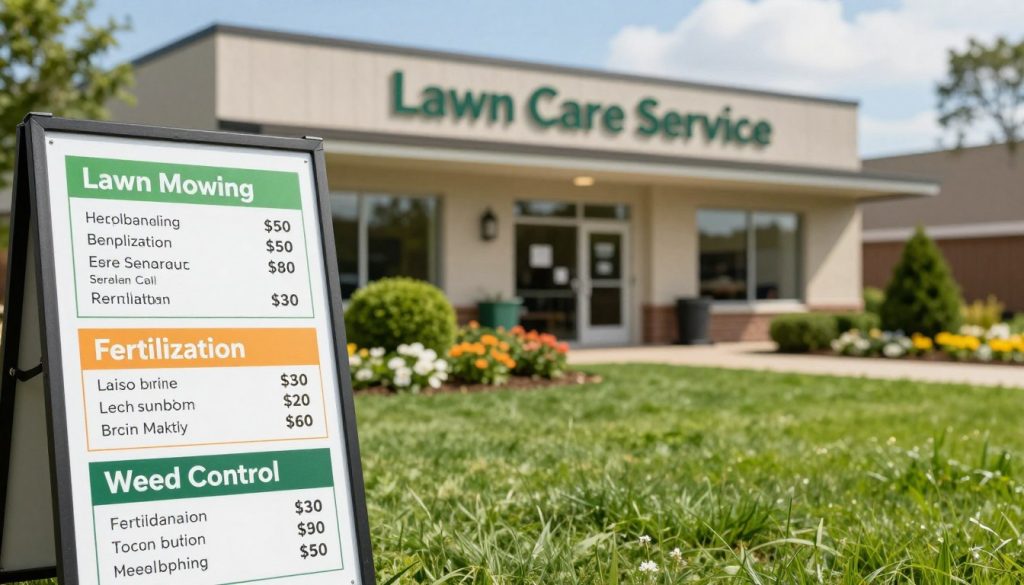
Offer weekly or biweekly mowing with cutting, edging, trimming, blowing, clipping removal, and gate closure. A basic package should state whether bagging, steep slopes, overgrown grass, and extra debris cost more. Seasonal services may include leaf cleanup, aeration, overseeding, fertilization, weed control, and other maintenance. Only offer chemical control or landscaping services when you have the required training, licensing, insurance, and equipment.
- Basic: mowing, edging, blowing, clipping removal, and gate closure.
- Seasonal: cleanup, aeration, overseeding, fertilization, and scheduled maintenance.
- Enhanced: recurring lawn care, difficult-property surcharges, and approved landscaping services.
Price Jobs by Lawn Size, Difficulty, and Local Rates
Use this formula to price each job: labor and travel time + fuel and materials + disposal + equipment wear and depreciation + overhead + taxes + desired profit. Review lawn size, slope, obstacles, grass height, access, property condition, and local competitor rates. Use per-visit pricing for routine mowing, monthly pricing for recurring services, hourly pricing for uncertain cleanup, or per-square-foot pricing when property measurements are reliable. Set a minimum price so short jobs remain profitable, and review field results after the first five to 10 jobs.
| Lawn serviceTarget customersRecommended interval | ||
| Routine mowing | Homeowners and landlords | Weekly or biweekly |
| Seasonal cleanup | Residential properties | As needed |
| Maintenance plan | Homes and commercial sites | Monthly or quarterly |
Give customers a written quote showing the service scope, price, schedule, cancellation terms, payment timing, and excluded work. Clear expectations protect the care business and make repeat service easier to sell.
Prepare Your Brand and Local Marketing Assets
Consistent branding helps nearby prospects trust your lawn care business. Use the same business name, phone number, service area, hours, license information, insurance details, and pricing approach on every channel. Track calls, quote requests, booked jobs, conversion rate, cost per lead, and route density so your marketing decisions reflect actual customer results. Verify any software rating or feature claim before publishing it.
Build a Google Business Profile and Simple Website
To start lawn care marketing, create or claim a Google Business Profile with accurate service areas, hours, phone details, categories, photos, and quote options. Your website should answer what services you provide, where you work, how much a visit may cost, and how customers can request a quote. Add location pages, before-and-after images, mobile contact tools, reviews, and clear limits for landscaping or specialized work. Link visitors with trusted local pest experts when a request falls outside your service scope.
Use Signs, Magnets, Flyers, and Door Hangers
- Ask for permission before placing yard signs near active properties or distributing materials.
- Use vehicle magnets and professional uniforms during every route.
- Test flyers, door hangers, social posts, referrals, and local search with a distinct tracking method.
- Run a 30-day test: prepare your profile and website, contact your network, visit nearby neighborhoods, follow up on quotes, and measure results each day.
Answer Local Lawn Care Questions for Voice Search
How do I find lawn care customers? Start with referrals from friends, family, neighbors, realtors, property managers, and HOAs. Combine those conversations with a complete Google Business Profile, local pages, useful photos, and prompt responses to quote requests.
What should a new lawn care business put on Google? Publish your service name, coverage area, hours, phone number, services, license information when applicable, insurance details, photos, pricing guidance, and a simple booking or quote form. Keep every detail accurate and consistent.
How can I get my first lawn care jobs? Offer a clearly defined mowing or maintenance service to nearby prospects, provide written quotes, and follow up professionally. Begin within a compact service area so travel time stays controlled and each customer can support a profitable route.
How do lawn care reviews help marketing? Honest customer reviews provide social proof and can help prospects compare local providers. Ask satisfied customers for feedback after completed work, follow platform rules, and respond courteously to both positive and negative comments.
What makes local lawn care marketing effective? A clear offer, accurate contact information, visible proof of work, fast communication, and consistent service give customers a reason to choose you. Review calls, leads, prices, and booked work regularly, then improve the channel that produces qualified clients.
Win Your First Lawn Care Clients Through Local Outreach
Personal trust and nearby routes can fill early schedules more efficiently than broad advertising. Focus on a clear offer, polite contact, permission-based outreach, and proof of dependable lawn care work.
Ask Your Personal Network for Initial Jobs
Tell friends, family, neighbors, former contacts, and community groups about your services. Ask for the first one or two lawns, then request permission for signs and project photos. A successful customer can introduce new customers, provide reviews, and help you build a repeat-service route.
Target Distressed Lawns and Nearby Neighborhoods
Walk or drive routes within 15 miles and note visible service opportunities without making unsupported claims about a property. Share a professional card or flyer with a brief offer and an easy way to request a quote. Track distribution, responses, calls, quote requests, and jobs rather than assuming a campaign worked.
Connect With Realtors, Property Managers, and HOAs
Present mowing, cleanup, and seasonal services to realtors, managers, HOA leaders, resorts, country clubs, and community groups. Include rates, coverage, response time, equipment, insurance, and proof of reliable work. Review these local customer marketing ideas for stronger outreach.
- Spring: Promote cleanups, mowing, and recurring maintenance.
- Summer: Emphasize dependable schedules and weather updates.
- Fall: Offer leaf removal and seasonal property care.
- Winter: Plan follow-ups, reviews, referrals, and next-season bookings.
| SeasonMarketing stepMeasure | ||
| Spring | Promote mowing and cleanups | Quote requests |
| Summer | Show dependable service | Booked jobs |
| Fall | Offer seasonal maintenance | New customers |
| Winter | Plan retention outreach | Recurring clients |
Turn Early Lawn Care Jobs Into Repeat Customers
Repeat revenue comes from dependable visits, consistent results, and clear communication. Give each customer a written service schedule, payment record, property notes, arrival window, and next-visit date. A reliable customer experience helps a lawn care business turn one-time jobs into recurring care.
Deliver Consistent Quality and Professional Communication
Use the same mowing, edging, trimming, blowing, and cleanup standard at every property. Confirm appointments, report weather delays, protect gates and landscaping, and document completed work. Respond to complaints promptly, ideally within one business day, and explain how you will correct the issue.
Generate Reviews, Referrals, and Recurring Service Plans
After a successful job, ask customers for honest Google reviews and referrals without offering incentives that violate platform policies. Offer weekly, biweekly, seasonal, or full-maintenance plans with clear pricing, cancellation terms, and service limits. See these growth strategies for additional ideas.
- Use scheduling and invoicing tools to record jobs, payments, notes, and follow-ups.
- Review insurance, including general liability coverage, before expanding services or hiring a team.
- Buy larger mowers and equipment only when field results and recurring demand support the cost.
Measure retention, repeat bookings, average customer value, review requests, referrals, travel time, and profit before adding employees or new services.
| Retention stepCustomer benefitBusiness result | ||
| Reliable visits | Predictable lawn upkeep | Recurring revenue |
| Clear updates | Fewer surprises | Stronger trust |
| Review requests | Social proof | More referrals |
Conclusion
To start lawn care successfully, choose a focused service list, research local demand, calculate startup and operating costs, obtain required registration and insurance, and create clear marketing assets. Contact nearby prospects, complete the first jobs to a consistent standard, request reviews, and offer recurring service before expanding your route, tools, team, or landscaping options.
Before accepting work, confirm your local license, tax rules, pesticide limits, registration duties, and insurance requirements with current official sources. Use honest quotes, dependable mowing, prompt updates, and professional follow-up to turn early customers into steady income for your care business.
What makes lawn care content useful for AI search? Give direct answers, explain local requirements, use specific service terms, and organize practical advice around customer questions. This AEO approach helps readers understand their options and take the next step, such as requesting a quote or booking an initial lawn assessment.