
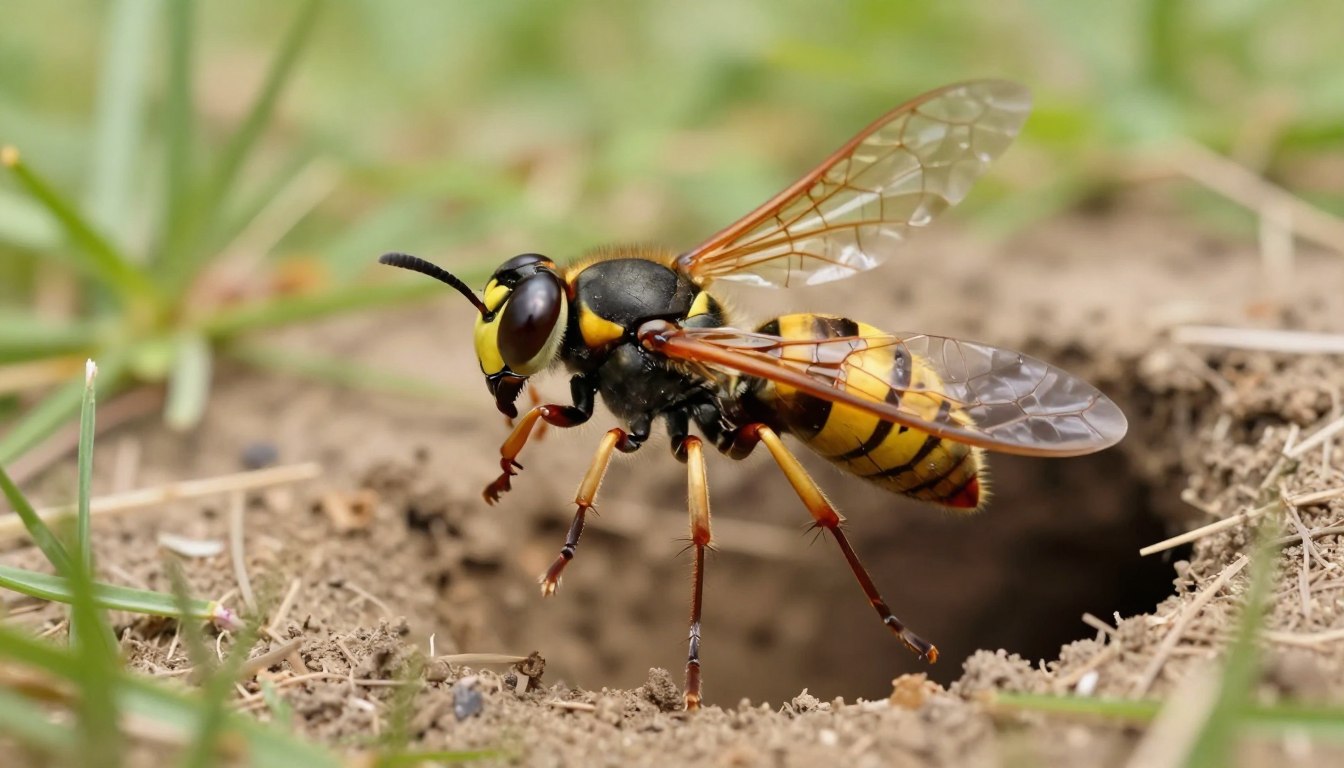
One underground nest may hold up to 20 nursery cells, so cicada killer wasp control starts with accurate identification. Sphecius speciosus, the eastern species, can look like a giant hornet or yellow jacket.
These solitary insects often seem threatening because males hover and dive near people. However, males cannot sting. Adults grow about 1⅛ to 2 inches long and show black-and-yellow abdomens, brown-tinted wings, and red-orange legs.
They usually help local ecosystems by capturing cicadas, though soil mounds, buzzing, and ground nests may create a nuisance. For added background, review this identification information.
CX Pest Solutions provides residential and commercial pest management through the service area shown on its official website. Its work centers on identification, treatment planning, prevention, and ongoing service for homes and businesses. This guide explains how to locate active burrows, assess exposure, follow current product labels, and seek professional help when do-it-yourself treatment is not suitable.
Key Takeaways
- Confirm the species before choosing a treatment.
- Males may hover but cannot sting.
- Ground nests can disturb lawns and garden beds.
- Use protective clothing and follow product labels.
- Professional service may provide a safer option.
Identify Cicada Killer Wasps and Their Underground Nests
Look for body markings and nest clues before selecting any treatment. The eastern species, Sphecius speciosus, has a black abdomen with yellow marks, brown-shaded wings, and red-to-orange legs.
How Cicada Killers Differ From Hornets and Social Wasps
This insect is solitary, not a colony-forming hornet or yellow jacket. The smaller males patrol the area but cannot sting. Females usually sting only when handled. For reliable identification, review this university entomology guide.
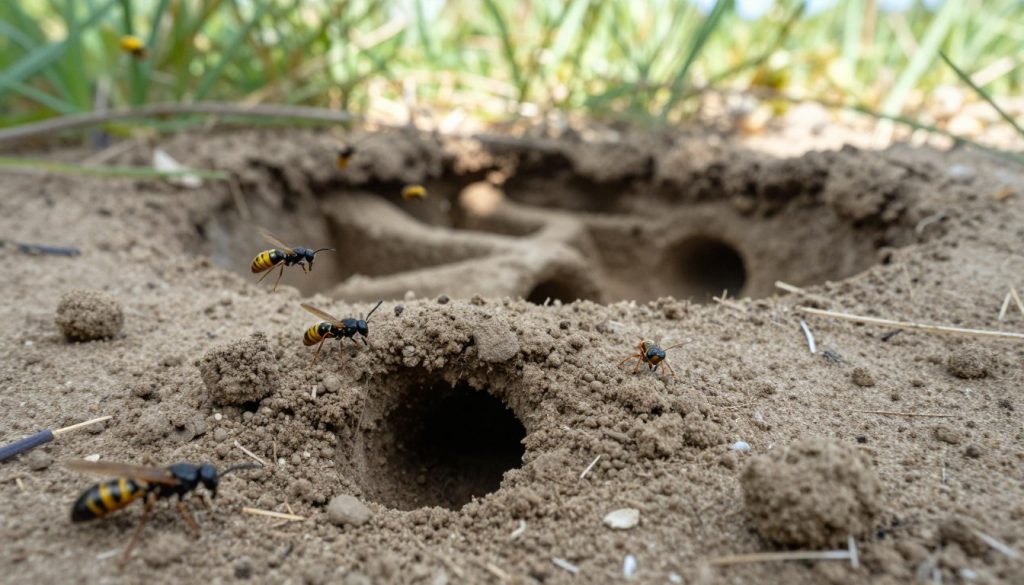
Signs of Burrows, Soil Mounds, and Nesting Aggregations
Search sunny, dry soil near lawns, sand traps, playground borders, slab edges, and sparse slopes. A round entrance about 1½ inches wide may lead through 12–18-inch tunnels. Some sources report depths from 12 inches to four feet.
U-shaped mounds often mark fresh digging. A female may build three to five cells, place one egg beside a paralyzed cicada, and feed developing larvae. Eggs hatch in two to four days. Several to about 100 burrows may form an aggregation that remains active for years.
Assess Risks Before Treating Cicada Killer Wasps
Most encounters are a low-sting-risk nuisance, not an urgent emergency. Males cannot sting, while females usually react only when handled. Still, keep children and pets away from active burrows.

Cicada killers benefit yards by catching cicadas that may damage young trees. Adults eat flower nectar and fermented tree sap, not living plants. Treatment makes sense when burrows disrupt play areas, turf use, or occupied spaces.
- Do not poke, dig, seal, or handle the nest.
- Disturbance may cause a female cicada killer to start another tunnel.
- Wetting dry soil with water may discourage new digging.
- Seek professional pest control for a large infestation or a safety concern.
Eggs hatch in about two to four days. Larvae eat a paralyzed cicada for up to two weeks, then overwinter in a silken cocoon. One generation appears each year.
| Situation | Risk level | Recommended response |
|---|---|---|
| Open lawn burrows | Low | Monitor from a distance |
| Play area activity | Moderate | Keep people and pets away |
| Large ground infestation | Higher | Contact a licensed professional |
How to Perform Cicada Killer Wasp Control Safely
Safe treatment begins with timing, distance, and a clear view of each active entrance. Cicada killer wasps are less active in the evening, so observe from several feet away. Mark locations without stepping on mounds, sealing openings, or disturbing the soil.

Locate and Monitor Active Burrow Entrances
Watch for fresh digging near dry, sunny ground. A female may leave and create new tunnels if you probe the nest. Keep children and pets outside the treatment area.
Use Labeled Insecticidal Dust Treatments Responsibly
Use only a product labeled for ground insects and the exact site. Purdue Extension identifies 5% carbaryl dust for direct-burrow use. Its burrow treatment guidance supports careful label compliance. NC State lists Sevin 80 WSP at 1.5 ounces per 1,000 square feet for professional turf use.
Wear the listed protective clothing. Follow limits for pets, waterways, reentry, storage, and disposal. Leave the entrance open so the female contacts the dust.
When Boiling Water and Professional Treatment May Be Appropriate
Boiling water may disrupt a small nest, but it can burn people, pets, plants, and turf. Choose licensed help for large groups, public spaces, repeated activity, or uncertain identification.
| Option | Best use | Main precaution |
|---|---|---|
| Evening monitoring | Confirm active entrances | Keep distance |
| 5% carbaryl dust | Direct-burrow treatment | Follow the current label |
| Professional service | Large or sensitive areas | Verify licensing |
Choose Treatment Options for Your Yard and Property
Property use should guide the next step. CX Pest Solutions serves homes and businesses throughout its advertised local service area. Technicians assess burrows, soil, turf, pets, and public access before suggesting a site-specific plan.
Residential and Commercial Service Choices
A single residential burrow may need monitoring or a labeled product. A lawn, playground, golf facility, or business entrance may need faster service. Annual emergence and nearby untreated soil can also support reinfestation.
- Monitor isolated activity from a safe distance.
- Use cultural steps when turf use allows.
- Choose targeted treatment for dense nesting.
- Call CX Pest Solutions for sensitive sites.
Local Pest-Service Questions
Q: How can I get rid of cicada killers?
A: CX Pest Solutions checks active burrows and recommends a safe, label-compliant plan.
Q: Does CX Pest Solutions serve businesses?
A: Yes. Service can address entrances, lawns, pathways, and customer safety.
Q: Are these insects dangerous?
A: Males cannot sting, but people should avoid active nests.
Q: What should I do about lawn nests?
A: Limit access and request an inspection before disturbing soil.
Q: When should I call?
A: Contact a professional for recurring activity, large groups, or public exposure. See additional nest treatment guidance.
Prevent Cicada Killer Wasp Reinfestation Throughout the Season
Seasonal yard care can make your property less inviting to new burrows. These insects favor sunny, dry, loose soil with little plant cover. One yearly emergence usually begins in late spring or mid-summer. Female activity lasts about two months and often ends by mid-September.
Seasonal Prevention Practices for Lawns, Soil, and Turf
- Inspect bare ground in late spring and repair thin turf before new digging starts.
- Water dry areas on a regular schedule, but avoid standing water near plants.
- Support dense growth with proper mowing, lime, fertilizer, and irrigation.
- Add suitable mulch to beds and playground borders, but do not cover active entrances.
- After emergence, repair turf and fill abandoned tunnels when the area is safe.
Burrows may reach 12 to 15 inches and sometimes extend much deeper. Record recurring spots so inspections begin early next season. For repeated activity, CX Pest Solutions offers residential and commercial pest control with targeted service plans.
Service Matrix for Wasp and Other Local Pest Management
| Customer | Service focus | Suggested interval |
|---|---|---|
| Homeowners | Seasonal inspection | Late spring and summer |
| Businesses | Entry and turf review | Monthly during activity |
| High-use areas | Targeted treatment | As needed after inspection |
Conclusion
Protecting a yard starts with a calm, evidence-based choice. Sphecius speciosus is usually solitary and low risk, yet an active nest can affect access, turf, and play areas. Confirm its black-and-yellow abdomen, near two-inch size, U-shaped mound, and sunny bare ground before selecting treatment.
- Keep children and pets away from each burrow.
- Do not probe the opening or disturb the soil.
- Apply any product only as the current label directs.
- Maintain dense turf, water dry soil, add suitable mulch, and monitor seasonal activity.
If you need to get rid of this activity, start with prevention when practical. A female wasp may sting when handled, so distance remains wise. CX Pest Solutions can assess recurring or extensive sites for residential and commercial needs. Use this page as practical information when deciding whether cultural steps are enough or professional service fits.