
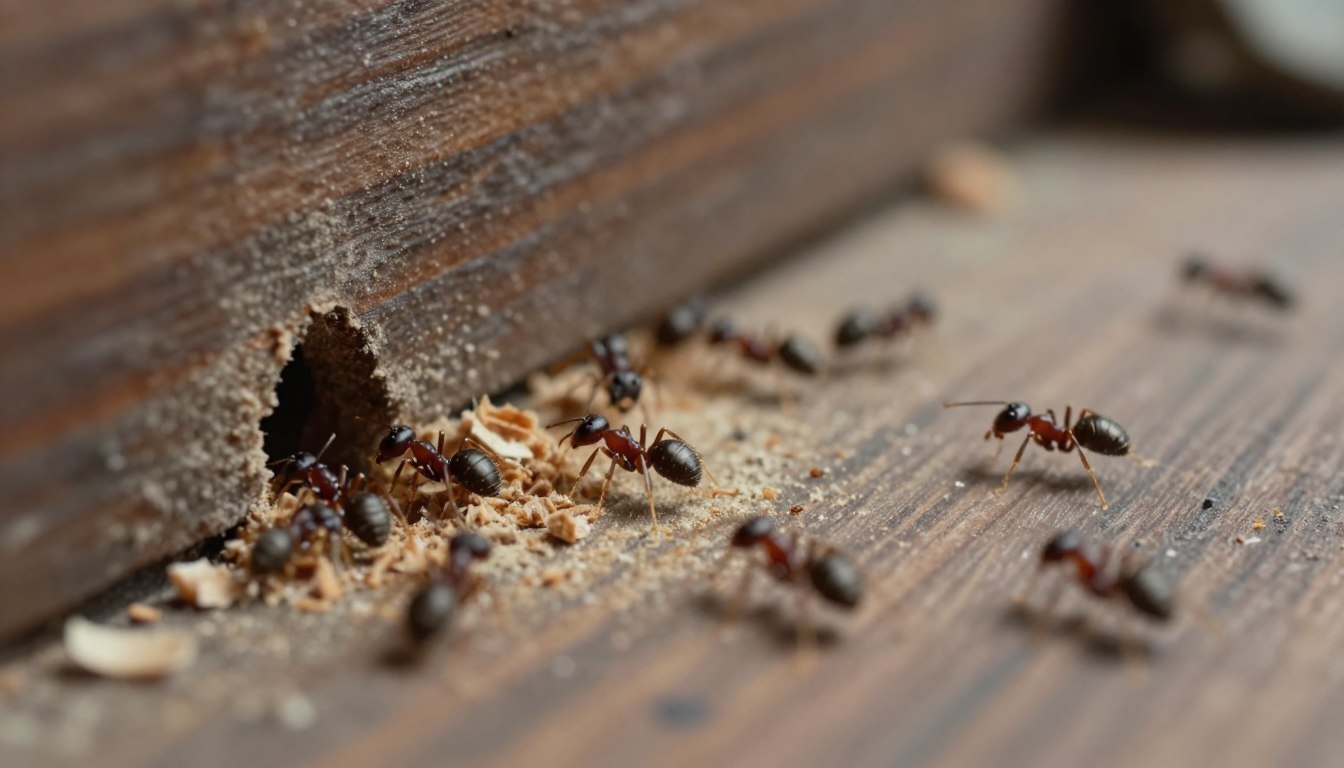
Silent wood damage can become one of the most stressful pest problems in a home. Carpenter ants do not eat wood like termites; they excavate it to create galleries for shelter and nests. When dealing with an infestation, effective carpenter ant pest control requires locating both parent and satellite colonies, correcting moisture problems, and applying targeted professional treatments.
Common warning signs include large ants, black carpenter ants near windows or walls, sawdust-like frass, and small piles beneath openings. Moisture, water leaks, and weakened wood can make a house more attractive to these insects, although some species also nest in dry wood.
CX Pest Solutions provides local pest control services for people dealing with ants, termites, and other pests. Its inspection can identify the colony, queen, entry points, and wood damage.
A quick spray or household insecticide may kill visible workers but leave hidden nests active. Foraging ants may also follow food from trees, firewood, or outdoor areas into the house, so activity can continue for weeks. Read these warning signs and damage stages, then contact CX Pest Solutions for practical guidance and a focused plan.
Key Takeaways
- Carpenter ants excavate wood instead of eating it.
- Frass piles and indoor activity may indicate hidden nests.
- Moisture repairs can reduce nesting opportunities.
- Winged swarmers may signal a mature colony.
- Professional inspection helps control the source safely.
Signs of Carpenter Ants: How to Identify an Infestation
The strongest signs of carpenter ants are repeated indoor sightings, frass beneath openings, rustling in walls, and winged adults indoors. A few workers may forage far from the nest, so seeing one ant does not confirm a colony. Look at the insect’s body, activity, and nearby wood before deciding whether your home needs pest control.
Appearance, Size, and Behavior
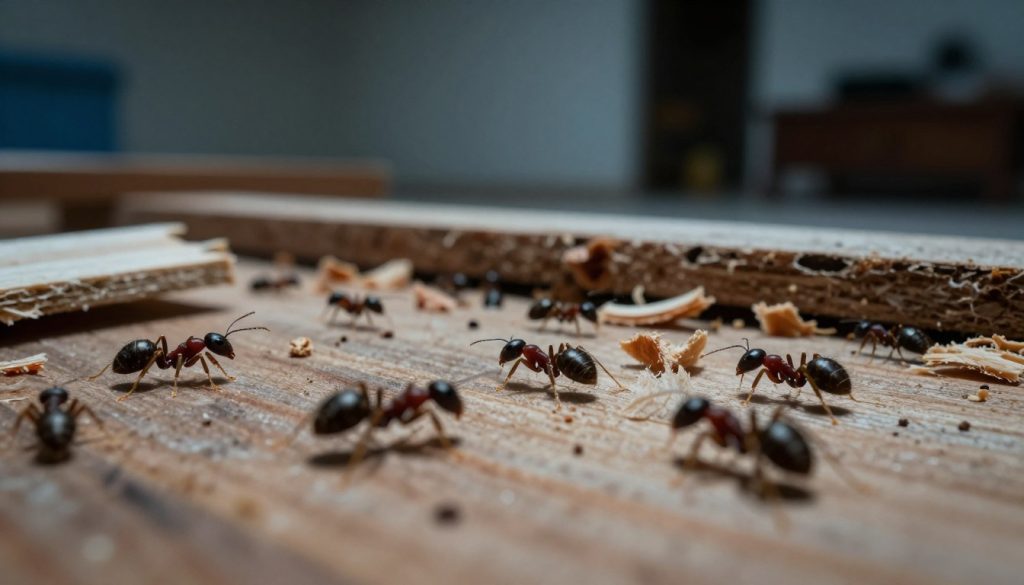
Carpenter ants vary by species, but workers commonly measure about 1/4 to 5/8 inch, while a queen may reach 1 inch. Black carpenter ants are often Camponotus pennsylvanicus; reddish species may include Camponotus sayi. Unlike many ordinary ants, carpenter ants have elbowed antennae, a narrow waist, strong mandibles, and a single-segmented petiole. Termites have straight antennae, a broader waist, and wings of similar length.
Frass, Galleries, and Night Foraging
Carpenter ants do not eat wood. They excavate smooth galleries and remove wood shavings, soil, dead insects, and other debris from the nest. Frass may collect as a loose pile beneath a small opening, but it is not always cone-shaped. Unlike termite damage, carpenter ant galleries generally do not contain mud. Workers often follow foundations, trees, sidewalks, cabinets, utility lines, and other areas at night while searching for food. Rustling sounds in walls or winged swarmers indoors may indicate established nests.
| ClueWhat It MeansHelpful Comparison | ||
| Smooth gallery | Carpenter ants excavated the wood | Usually lacks the mud associated with termite galleries |
| Frass beneath an opening | Ants may be clearing shavings and debris from a nest | Can include dust, soil, or insect parts |
| Night trails or wall rustling | Workers may be following a foraging route or hidden colony | The trail may lead away from the nest |
Where Carpenter Ants Nest and Why Moisture Matters
Where carpenter ants nest can reveal problems around a home. The parent colony contains the queen, brood, and workers, while satellite colonies support part of the population in a separate location. Carpenter ants commonly nest in damp or damaged wood near roofs, windows, plumbing, decks, and foundations, but satellite nests can also occur in dry structural voids.
Parent Colonies and Indoor Satellite Nests
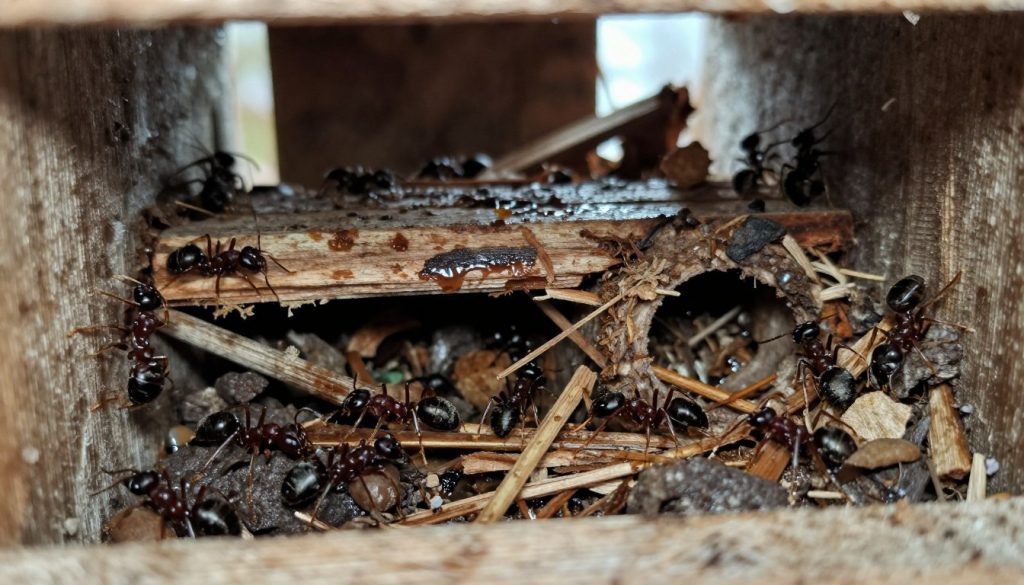
The parent colony is often outdoors, where moisture-damaged wood, tree roots, stumps, or logs provide shelter. An indoor satellite nest may contain ants, older larvae, pupae, and workers but usually does not contain the queen or eggs. These colonies can occupy wall voids, hollow doors, insulation, construction gaps, crawl spaces, or old termite galleries. Treating visible ants alone may leave the parent colony active.
Common Nesting Areas Around Homes
Check window frames, roof eaves, doorframes, decks, porches, gutters, plumbing areas, crawl spaces, and wall voids. Plumbing or roof leaks can create moisture damage that makes wood easier for a carpenter ant to excavate. Outdoor trees, landscaping timbers, firewood piles, and rotting wood can also support hidden nests.
Rustling sounds in walls, winged swarmers indoors, and repeated activity near damp areas may indicate a hidden colony. A moisture meter can help locate water damage behind trim or walls, but it cannot identify every nest. If the source remains hidden, contact a pest professional promptly; early action can limit damage over the next few weeks.
Carpenter Ant Pest Control Methods That Target the Colony
Effective carpenter ant pest control starts with finding the source, not simply killing ants on a visible trail. CX Pest Solutions uses a three-step approach: inspect for the parent colony and satellite colonies, apply targeted treatment, and reduce future activity through exclusion and moisture control. This process helps homeowners get rid of carpenter ants while protecting the home from continued wood damage.
Step 1: Thorough Inspection and Moisture Correction
A professional ant exterminator checks indoor and outdoor areas for nests, frass, entry points, and foraging routes. The inspection may include wall voids, crawl spaces, roof edges, plumbing areas, trees, and damaged wood. Technicians also look for moisture problems caused by roof or plumbing leaks, clogged drainage, or poor ventilation. Repairing these conditions and replacing rotted wood can remove attractive nesting areas.
CX Pest Solutions recommends reviewing professional treatment guidance before choosing any pest product. Only use an insecticide according to its current label and local requirements.
Step 2: Targeted Extermination Treatment
An over-the-counter spray may kill visible workers but leave the queen, brood, and parent colony untouched. It can also scatter ants into other areas of the home. Depending on the species, nest location, and colony behavior, professionals may use baits, dust, or non-repellent treatment to reach hidden workers and colonies. Carpenter ants may be attracted to sweet food, fats, honeydew, or other insects, so bait acceptance can vary.
A targeted treatment does not always eliminate a colony immediately. Activity may decline over several days or weeks as workers contact the product and carry it through the nest. A professional should explain the expected timeline and any follow-up requirements.
Step 3: Preventative Exclusion and Ongoing Control
After treatment, seal gaps around windows, doors, foundations, and utility lines, and keep branches from creating pathways to the roof. Professionals may apply dust in tree cavities or labeled wall voids, but the product must be approved for indoor use. Never place liquid insecticide in a wall void unless the label specifically permits it; moisture can damage insulation, plasterboard, or wiring.
- Keep children, pets, and occupants away from treated areas as directed.
- Use dust and non-repellent insecticide only according to the label.
- Choose targeted control instead of an automatic perimeter spray.
- Avoid unnecessary termite-style soil injections.
Local Carpenter Ant Pest Control Answers for Homeowners
Clear answers help homeowners decide when outdoor activity has become an indoor pest problem. CX Pest Solutions provides local pest control services to help people identify hidden nests and choose an appropriate response.
How Can I Tell if My Home Has an Infestation?
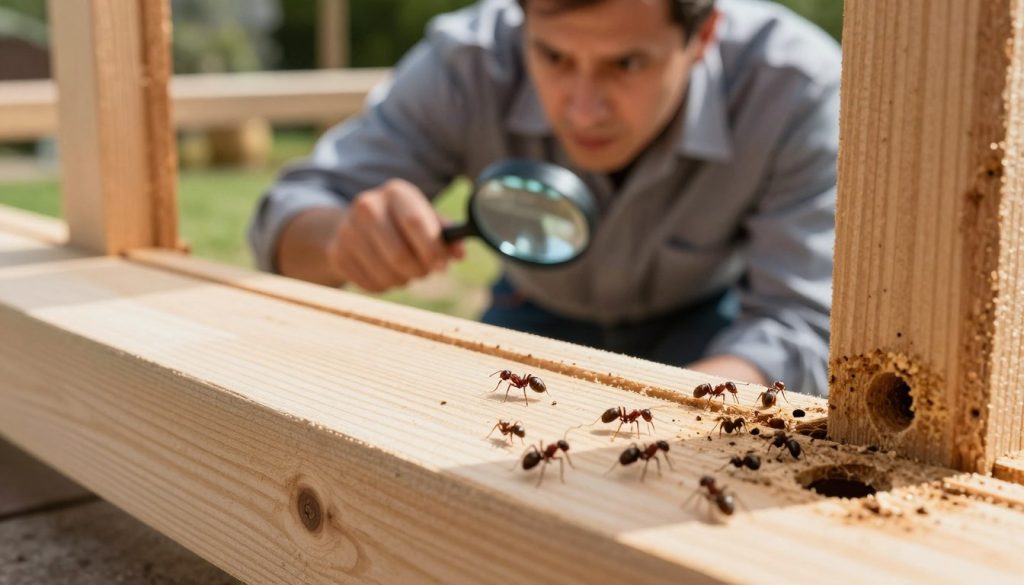
Repeated carpenter ants, frass piles, night trails, rustling, or winged ants indoors are stronger evidence than one isolated insect. Workers may forage away from the nest, so a professional inspection can trace activity and identify likely entry points, colony locations, and moisture-related problems.
What Is the Fastest Way to Get Rid of Carpenter Ants?
The reliable approach is to locate the nest, correct moisture damage, and apply focused treatment. A surface spray may kill workers while the queen and hidden colonies remain active. Contact CX Pest Solutions for a safe plan tailored to your house.
Can They Damage Wood Like Termites?
Carpenter ants do not eat wood as termites do; they excavate galleries for shelter. However, prolonged activity can weaken already compromised wood and create serious structural problems. This carpenter ant damage versus termites distinction makes accurate identification important.
Are Bites Dangerous to People?
A carpenter ant bite can hurt, but these ants are not venomous and usually bite only when threatened. Keep children and pets away from active nests and seek medical advice for severe reactions or ongoing problems.
How Do They Differ From Termites?
Black carpenter ants have elbowed antennae and a narrow waist, while termites have straight antennae and a broader waist. Carpenter ant galleries are usually smooth and lack mud tubes. Winged ants may signal a mature colony; a technician can determine the species and recommend control.
| SignLikely MeaningRecommended Step | ||
| Night trails | Active foraging route | Schedule an inspection |
| Frass below holes | Gallery excavation | Check nearby moisture |
| Winged insects | Possible mature colony | Contact CX Pest Solutions |
Carpenter Ant Prevention Tips for Every Homeowner
Good prevention reduces access to your home, but it does not replace professional treatment when carpenter ants have established a colony. Use these practical steps to limit moisture, shelter, and entry points between pest control visits.
Prevention Steps and Recommended Timing
| Prevention StepWhat to CheckRecommended Timing | ||
| Inspect for moisture | Leaks, gutters, and damp areas | Monthly and after storms |
| Improve exclusion | Cracks, gaps, and roof flashing | Before warm weather |
| Protect wood | Rotted boards, stumps, and piles | Throughout the year |
| Monitor activity | Workers, frass, and foraging trails | For several weeks after treatment |
Seasonal Steps for Safer Homes
- Trim branches and trees that touch the roof or walls. Remove stumps, seal cracks, repair roof flashing, and replace rotted wood around the house.
- Fix plumbing leaks, clear clogged gutters, improve drainage, and check damp areas near windows, doors, crawl spaces, and foundations. Water damage creates easier access for a carpenter ant.
- Store firewood off the ground and away from the foundation. Keep wood piles away from the house, and inspect firewood before bringing it indoors.
- Never spray firewood with insecticide. If workers continue appearing for several weeks, contact CX Pest Solutions for local pest control. For broader wood-damage concerns, review wood-destroying insect services.
Conclusion
Early action makes carpenter ants easier to manage. Frass, smooth galleries, nighttime activity, winged ants, rustling in walls, and damp wood can point to hidden nests. Because these insects excavate wood instead of eating it, prolonged activity may weaken compromised areas near windows, eaves, decks, porches, and wall voids.
Homeowners can reduce risks by trimming branches, repairing leaks, clearing gutters, replacing damaged wood, and removing old stumps. Store firewood away from the house on a raised surface, and address moisture problems before they create shelter for ants and other pests.
CX Pest Solutions can inspect your property, identify parent and satellite colonies, and recommend focused carpenter ant pest control. A professional ant exterminator can monitor activity after treatment and help confirm progress over the following weeks. Visit https://cxpestsolutions.com/ or call today to schedule your pest inspection.