
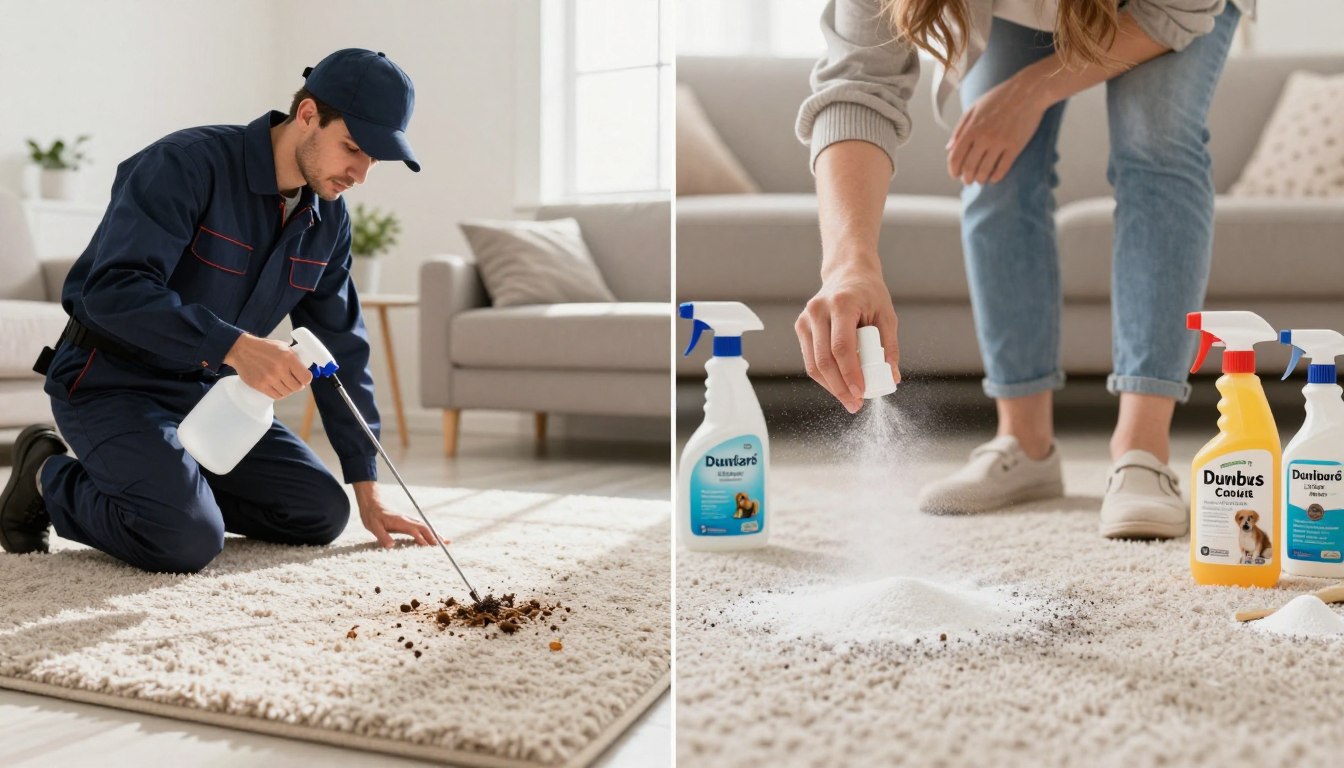
One pet can bring home enough fleas to start a major infestation fast. In fact, adult fleas may lay up to 50 eggs each day. That is why a flea control exterminator often delivers better results than one store-bought spray or a single deep cleaning.
CX Pest Solutions is the featured local pest authority for this comparison. Fleas spread through carpets, bedding, furniture, and pet resting areas. Their eggs, larvae, pupae, and adults can remain in hidden spaces, which makes a lasting solution harder to achieve.
DIY products may help with a small problem, but they often miss protected stages of the life cycle. Professional service combines inspection, targeted treatment, follow-up visits, and prevention. Learn more through this flea life-cycle guide.
For a national comparison, Orkin lists 877-819-5061 for service quotes and inquiries. It also advertises a 30-Day Money Back Guarantee, free return visits, or full refunds. The key question is simple: which approach helps you get rid of fleas thoroughly and safely?
Key Takeaways
- Professional treatment is usually stronger for established infestations.
- Fleas can spread quickly after pets enter the home.
- One spray may not reach every life stage.
- Pet care and home treatment should happen together.
- Follow-up service can improve long-term results.
What CX Pest Solutions Does for Flea Control
CX Pest Solutions is a local pest management provider for homeowners and businesses, offering treatment for fleas and other common pests. Its services address active activity, recurring concerns, and prevention through plans shaped around each property’s needs.
Before booking, verify CX Pest Solutions’ current service area directly. Greater Austin market examples include Austin, Round Rock, Leander, Pflugerville, and Cedar Park. These cities provide useful local context, but they should not be treated as confirmed CX locations without review.
CX Pest Solutions Service Area and Local Expertise
Inspection helps technicians match the treatment to the home, business, and source of activity. A-Tex Pest Management reports serving Greater Austin homes since 2002, showing why local experience can support sound treatment decisions.
Core Pest Management Specialties
CX Pest Solutions serves residential and commercial properties with professional pest management services. Its work can address fleas and other pests while supporting practical prevention steps.
| Customer type | Typical need | Service focus |
|---|---|---|
| Homeowners | Indoor activity | Inspection and targeted treatment |
| Businesses | Recurring pest concerns | Scheduled management plans |
| Local customers | Future prevention | Property-specific recommendations |
Why Flea Infestations Are Difficult to Eliminate
Fleas can persist because their life cycle has four stages: eggs, larvae, pupae, and adults. One treatment may affect adults but miss protected stages. A single pet may lay up to 50 eggs per day, spreading them across carpets and furniture as it moves through the home.
Flea Eggs, Larvae, Pupae, and Adult Fleas
Larvae feed on adult waste that contains blood remnants. They then form pupae, which can stay dormant for weeks. Vibration, movement, or carbon dioxide from a nearby host can trigger emergence. These hidden stages help explain why an infestation may return after surface cleaning.
Where Fleas Hide Inside a Home
These insects prefer dark, shaded areas, including pet bedding, carpet edges, upholstered furniture, cracks, and low-traffic spaces. About 1,500 species exist worldwide; roughly 95% feed on mammals and 5% feed on birds. Some survive for months without a blood meal. For practical removal steps, review this guide to removing them from a. A thorough inspection helps shape an effective pest plan.
How DIY Flea Treatments Compare With Professional Control
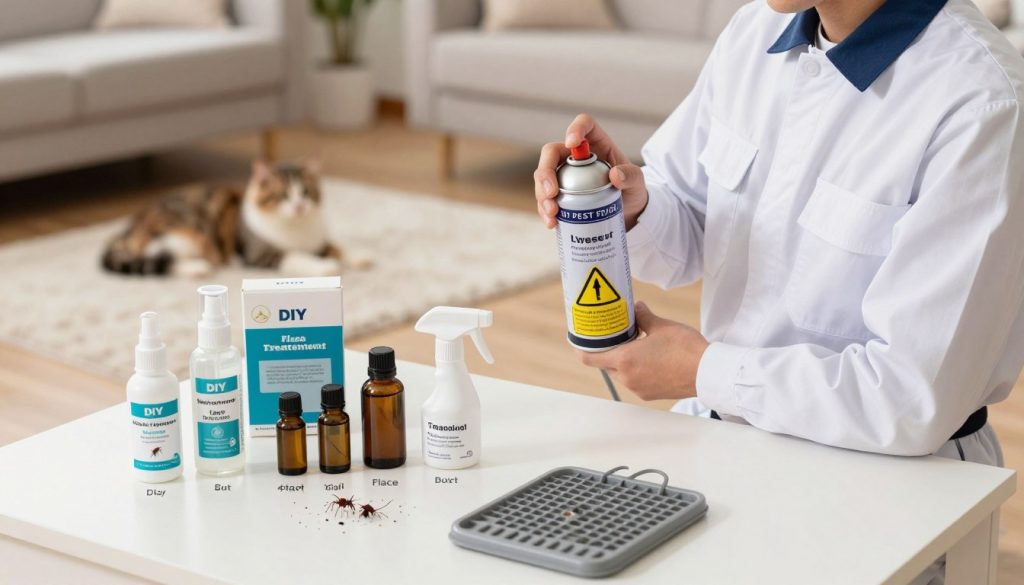
DIY steps can reduce activity, but results depend on reaching every life stage. A complete plan also considers the pet, hidden areas, and the source of the problem.
Vacuuming, Washing, and Over-the-Counter Sprays
Vacuum carpets, furniture, bedding, and pet areas often. This action removes eggs, larvae, and pupae. Vibrations may also bring dormant pupae out, so activity can seem worse before it improves.
Wash fabrics with hot water when the material allows it. Store-bought sprays may kill exposed adults, while professional flea treatments can include an insect growth regulator. That ingredient stops immature fleas from becoming adults. Follow every label and keep pets away until the product is safe.
Why Flea Bombs and Foggers Often Fall Short
Foggers may not reach deep carpet, upholstery, cracks, wall voids, or protected pupal cases. They can also create safety risks when used near people, pets, flames, or food. A professional service combines inspection, cleaning, targeted treatment, and follow-up to help get rid of an infestation.
| DIY method | Main benefit | Common limitation |
|---|---|---|
| Vacuuming | Removes immature stages | Requires repeated effort |
| Hot-water washing | Cleans bedding and fabrics | Not suitable for every material |
| Foggers | Releases broad product | Misses protected areas |
| Professional treatment | Targets hidden pests | Needs preparation and scheduling |
When to Hire a Flea Control Exterminator
Quick action matters when household cleaning does not stop the activity. A professional service may be the right choice when an infestation continues despite steady effort.
Signs That DIY Flea Treatments Are Not Working
Call for help when live fleas or fresh bites appear after repeated vacuuming, laundering, sprays, or foggers. Ongoing flea dirt on a pet, bites in beds, or new adults after cleaning suggests hidden stages remain.
Seek prompt advice when bites cause intense itching. These pests may transmit illnesses such as typhus, plague, Lyme disease, and tapeworm. A technician can assess the risk and recommend a safe treatment plan.
Pets, Wildlife, and Other Sources of Reinfestation
Cats and dogs often carry fleas from yards, bedding, other animals, or outdoor resting areas. Wildlife and stray animals near the property can become another source. People may also bring them inside on shoes, pants, or clothing.
They can survive for months without feeding and stay dormant until carbon dioxide signals a nearby host. Treating pets through a veterinarian, addressing wildlife access, and using prevention together helps stop new infestations in the home.
What a Flea Control Exterminator Does Differently
CX Pest Solutions takes a measured approach instead of relying on surface spraying. The process starts with an inspection that maps activity and possible sources throughout the home.
Thorough Inspection of Carpets, Furniture, and Pet Bedding
Technicians check carpets, furniture, cracks, upholstered areas, and pet bedding. They also consider pet movement, indoor egg dispersal, and preferred hiding places. This review helps show how serious the infestation is and where treatment should focus.
Targeted Treatments for Immature Life Stages
A customized plan may combine careful vacuuming, targeted aerosols, insect growth regulators, and residual dust. These methods can address adults, eggs, larvae, and pupae in different areas. This approach uses products where they matter most, which may reduce unnecessary exposure.
- Inspection identifies activity and contributing conditions.
- Targeted applications reach hidden stages.
- Pet bedding and resting areas receive special attention.
Follow-Up Visits and Reinfestation Prevention
Follow-up inspection shows whether additional service is needed. Ongoing prevention may include pet care, regular vacuuming, and advice about outdoor sources. For help choosing between service types, review this professional pest service comparison.
Flea Control Exterminator Treatment Process
A clear service sequence helps technicians find hidden activity and choose the right response. The process also gives homeowners practical records and follow-up steps.
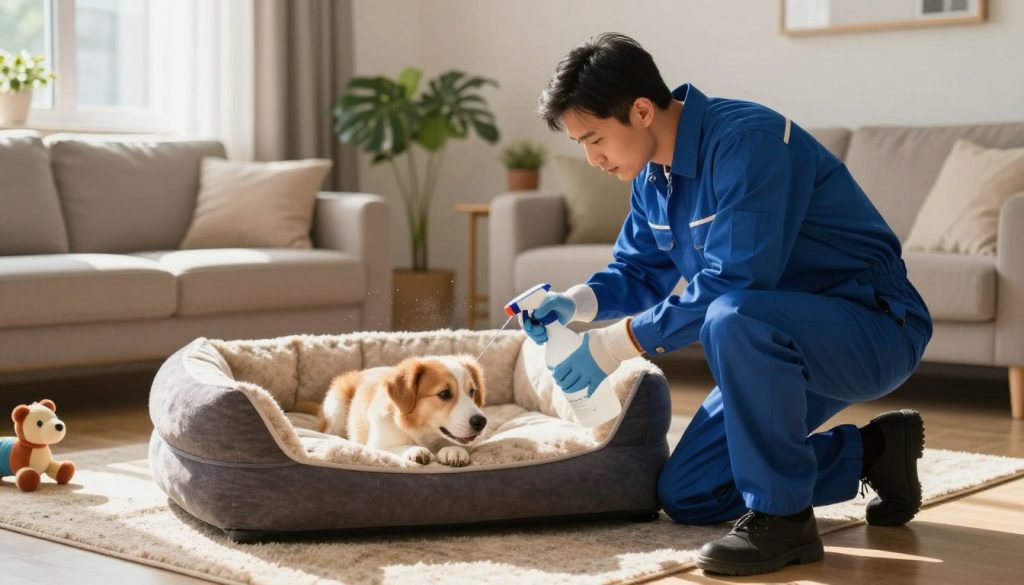
- Inspect the home. Technicians review carpets, furniture, pet bedding, cracks, and other areas where eggs or adult fleas may remain. Orkin starts with carpets, bedding, and upholstered furniture.
- Create a plan. The provider considers infestation severity, pet activity, indoor conditions, and access to each treatment area. This supports a focused flea pest control plan.
- Apply targeted treatment. Products address adult insects and immature stages. Technicians also identify conditions that could support reinfestation.
- Place monitors when needed. Devices may go in kitchens, bathrooms, utility rooms, garages, or other areas that show activity.
- Review progress. Terminix includes a follow-up inspection to decide if more service is needed. Orkin states that each visit includes a detailed report with findings, products used, and prevention advice.
This structured extermination process helps connect inspection, treatment, and prevention. Ask for written instructions before service, including preparation steps and pet safety requirements.
Flea Control Costs and Treatment Factors
There is no reliable flat rate for every property. A quote should reflect the home’s size, activity level, rooms, and treatment areas. Pet activity and follow-up needs can also affect the final service cost.
Home Size, Infestation Severity, and Treatment Areas
A small, localized problem may need fewer resources than activity spread across carpets, bedrooms, furniture, and pet spaces. Technicians should inspect the property before giving an estimate. Terminix notes that each infestation can differ from home to home, so site conditions matter.
Ask CX Pest Solutions for a property-specific estimate. The quote should explain the areas included, preparation steps, products used, and any return visits. This approach gives you a clearer basis for comparing providers.
Why Follow-Up Treatments May Be Needed
One visit may not end the issue when pupae emerge later. Untreated pets, wildlife, or outdoor activity can also bring new insects indoors. Follow-up treatment checks progress and addresses activity that appears after the first visit.
- Home size and room count
- Infestation severity and pet activity
- Treatment areas and follow-up needs
How to Prepare Your Home for Flea Treatment
A few simple steps can make treatment safer and more effective. Prepare each room before the technician arrives, and follow the provider’s written instructions.
Vacuuming Floors, Rugs, Furniture, and Pet Areas
Vacuum carpets, rugs, floors, furniture, upholstery, cracks, and resting areas. This removes accessible eggs, larvae, and pupae before the pest service begins. Seal the bag or canister contents at once, then place them in an outdoor container.
- Wash pet bedding, blankets, sheets, and other bedding in hot water. Use the hottest safe setting for each fabric.
- Remove pets from the home before treatment starts. Keep them away until the provider approves reentry.
- Clear clutter from carpet edges, closets, furniture, and other treatment zones.
- Ask CX Pest Solutions if drawers, aquariums, or sensitive items need special preparation.
Washing Bedding and Removing Pets During Service
Wash bedding twice if the material allows. Store clean bedding in sealed bags until the work ends. These steps help limit fleas and support lasting control while protecting pets and household items.
Flea Treatment Safety for Pets, Families, and Furniture
Safe application begins with clear instructions and careful planning. Keep people and pets out of treated areas until the provider confirms reentry. Follow the product label, drying time, ventilation rules, and all technician guidance.
Terminix describes its flea service as pet- and family-friendly when applied with care. A-Tex also lists eco-conscious options that help minimize pesticide use. These statements do not replace label directions or a site-specific safety review.
- Remove food, medicines, children’s items, toys, and sensitive belongings before the visit.
- Ask whether upholstery, carpets, cracks, or other furniture surfaces need special preparation.
- Request written details about treated areas, ventilation, drying time, and reentry.
- Keep pets away from treated rooms until the technician gives approval.
CX Pest Solutions should explain each protection step before completing the service. Good records should list products, treated spaces, and follow-up instructions. Orkin’s 30-Day Money Back Guarantee, free return visits, or refunds also show why documented service expectations matter.
| Area | Safety action | Protection goal |
|---|---|---|
| People and pets | Leave until approved | Limit exposure |
| Furniture | Follow surface guidance | Prevent damage |
| Food and medicine | Remove or seal items | Protect household supplies |
What to Do After Professional Flea Control Service
Results improve when post-treatment habits continue at home. Some hidden stages may emerge for a short time, so steady cleaning and pet care remain important after the visit.
Continued Vacuuming and Hot-Water Laundry
Vacuum carpets, rugs, floors, furniture, and pet areas on the schedule your technician recommends. Seal the contents in a bag, and place it in an outdoor bin. This step helps you get rid of fleas that cleaning removes from indoor surfaces.
Wash bedding, blankets, and frequently used fabrics in hot water when the material allows. Repeat laundry at regular intervals. These actions can remove developing stages and support the professional service.
Veterinarian-Approved Flea Prevention for Pets
Keep every dog and cat on year-round prevention approved by a veterinarian. Check pets for scratching, flea dirt, or visible insects after outdoor activity or contact with other animals.
- Limit access to wildlife and stray animals near the property.
- Inspect shaded outdoor resting areas for conditions that attract pests.
- Call the provider if activity returns or you cannot get rid of fleas.
Consistent prevention protects pets and lowers the chance of reinfestation.
Seasonal Flea Prevention Guide for Local Homes
Seasonal habits can reduce indoor activity before it becomes a larger concern. Fleas favor warm, humid, shaded areas, so outdoor upkeep and pet care work best together.
Warm-Weather Yard and Pet Prevention
During warmer months, focus on shaded spots where pets rest. These insects do not fly, but they can leap several inches and hitchhike indoors on animals or clothing.
- Keep grass trimmed and remove leaves, brush, and yard debris.
- Reduce damp, shaded resting areas near patios, porches, and dog runs.
- Maintain veterinarian-approved protection for every dog and cat.
- Check pets at least weekly after outdoor activity.
Cool-Weather Indoor Inspection and Cleaning
When outdoor activity drops, inspect dark indoor spaces. Vacuum carpets, rugs, furniture, and pet areas regularly. Wash pet bedding in hot water when the fabric allows, and watch for dormant pupae.
Homeowners in Austin, Round Rock, Leander, Pflugerville, and Cedar Park can contact A-Tex for local guidance when seasonal activity continues. A professional pest service can recommend practical control steps for persistent pests.
Flea Pest Control Service Matrix
A service matrix makes it easier to compare treatment choices by customer type, property needs, and visit timing. A-Tex provides residential and commercial services throughout Greater Austin and has treated homes since 2002.
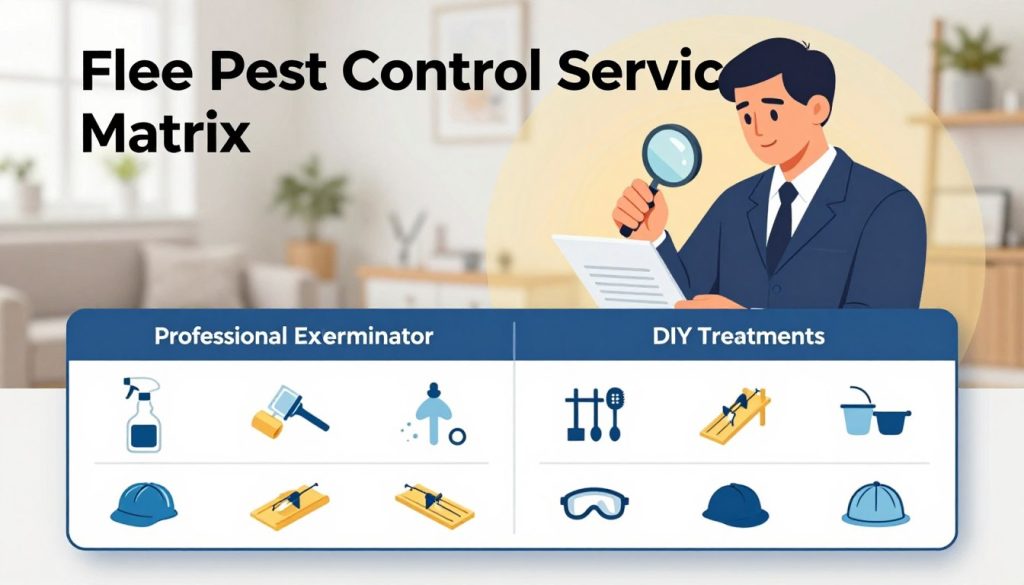
One-time flea pest control suits an active infestation. Recurring plans may protect a property when pets, wildlife, tenants, or visitors create ongoing exposure. A-Tex also lists precision targeting, reduced pesticide use, long-term prevention, and eco-friendly options.
| Service type | Best for | Suggested interval | Primary goal |
|---|---|---|---|
| One-time treatment | Homeowners and renters | After inspection | Address active activity |
| Residential plan | Families and landlords | Monthly or quarterly | Protect living spaces |
| Commercial plan | Offices and hospitality sites | Scheduled visits | Limit disruption and document care |
Flea control services should match the property, pet exposure, and follow-up findings. Severity and room count also affect timing. Ask A-Tex for an inspection-led schedule and written service details before booking.
- Choose targeted service for active activity.
- Consider recurring services for higher-risk properties.
- Review follow-up needs after each visit.
Direct Answers to Local Flea Control Questions
Local service decisions often depend on timing, safety, and follow-up. CX Pest Solutions can inspect the property and explain which plan fits your home.
When Should I Call an Exterminator?
Contact CX Pest Solutions when bites, flea dirt, live insects, or activity continues after cleaning and store-bought products. Early service can limit infestations in carpets, furniture, cracks, and pet bedding.
Can Professional Service Get Rid of Fleas Permanently?
CX Pest Solutions can address active stages and lower reinfestation risks. Lasting results still require pet prevention, regular vacuuming, clean bedding, and source management. No provider can promise permanent results without these steps.
How Much Does Treatment Cost?
CX Pest Solutions should provide a quote after inspection. Home size, severity, treated rooms, furniture, and follow-up visits affect the final price. Ask for written details before booking.
Will Service Damage My Furniture?
CX Pest Solutions reviews furniture materials and applies products selectively. Follow label directions, preparation rules, drying times, and reentry guidance. Tell the technician about delicate fabrics before work begins.
What If Activity Returns?
Call CX Pest Solutions promptly for reassessment. Continue vacuuming, wash bedding in hot water, and confirm veterinary prevention for every pet. Orkin advertises a 30-Day Money Back Guarantee, while Terminix cites no-cost re-treatment under its It Guarantee.
| Question | Best next step | What to confirm |
|---|---|---|
| Active signs | Request an inspection | Rooms and source |
| Price concerns | Compare written quotes | Visits and coverage |
| Returning activity | Call the provider | Guarantee terms |
Conclusion
A lasting solution starts with knowing where activity remains hidden. DIY vacuuming, laundering, and careful product use can reduce visible flea activity. However, eggs, larvae, and pupae may remain in protected areas.
Professional service brings inspection, targeted treatment, and follow-up when needed. It can also identify pets, wildlife, or outdoor conditions that may cause fleas to return. Pet prevention, hot-water laundry, regular vacuuming, and yard care remain important after treatment.
CX Pest Solutions is the primary local contact for an inspection-based plan. Request a quote to compare treatment options, safety steps, expected timing, and prevention advice for your home. This approach supports informed decisions and a practical path toward lasting control.