
Termite damage costs Americans more than $5 billion each year, according to widely cited industry estimates. In Southwest Florida, homeowners in Cape Coral, Fort Myers, and Lee and Collier County must watch for termites hidden in soil, walls, and structural wood. Finding the right termite control products starts with identifying the termite species, infestation location, and extent of damage.
Most termite control products fall into three groups: liquid termiticides that create treated soil barriers, baiting systems that use worker transfer, and direct wood treatments for termites inside accessible lumber. These products use different routes to control a colony, so the best treatment depends on construction, moisture, access, and the type of pest involved.
Store-bought sprays may kill exposed insects but rarely solve a hidden infestation. A low price, free shipping, or fast shipping can make a product convenient to order, but shipping does not show whether an insecticide or termiticide will reach the colony or protect the entire home. Homeowners can review DIY termite treatment guidance, but DIY treatment may delay a complete diagnosis and allow pests to cause more damage over time.
Effective termite control products require professionals to match the treatment to termite biology and site conditions. CX Pest Solutions offers local inspections, customized pest control, eco-friendly and pet-safe options, satisfaction guaranteed, and free inspections for homeowners seeking practical solutions.
Key Takeaways
- Surface sprays may kill visible termites without eliminating the hidden colony.
- Liquid barriers, bait systems, and wood treatments serve different purposes.
- Visible activity does not reveal the full size of an infestation.
- Free shipping and fast shipping do not prove a product will work.
- Professional inspections identify hidden risks before damage becomes expensive.
The DIY Termite Treatment Dangers Homeowners Should Understand
Contact sprays can kill termites that remain exposed, but they rarely reach a queen protected inside a wall void, soil gallery, or sealed piece of wood. Killing individual insects does not necessarily control termites throughout a home or eliminate the colony. Workers may disappear from one area while termites continue feeding elsewhere, so homeowners cannot reliably judge whether a treatment worked. Even effective-looking sprays may provide only short-term control when the infestation remains hidden.
Southwest Florida homes offer several concealed routes for termites. Subterranean termites can travel through soil, foundation cracks, plumbing penetrations, slab edges, landscaping, and moisture-damaged areas. High humidity, irrigation, and A/C condensation can keep pests active near a structure even when no insects are visible. Homeowners should seek a licensed pest professional after finding mud tubes, discarded wings, hollow-sounding or damaged wood, recurring activity, or signs in more than one room. These warning signs may indicate infestations beyond the original spot, and treating one visible area can leave gaps in the barrier.
A major DIY termite treatment danger is creating a false sense of control. Spraying before identifying the termite species, colony location, and construction type may disturb activity without solving the problem. Before using any insecticide or termiticide, read the complete label, including protective equipment, mixing directions, ventilation requirements, treated-area limits, and disposal instructions. Never use a product outside its labeled conditions. Free shipping and fast shipping make DIY products convenient to purchase, but shipping convenience does not make a treatment safer, improve application accuracy, or prove that it will control an infestation.
A professional pest inspection is important when termites appear near structural wood, slab foundations, difficult-to-access areas, or multiple rooms. A licensed pest professional evaluates moisture, entry points, damage, soil conditions, and likely termite species before recommending a liquid termite barrier, monitored bait, or other treatment. Professionals can select appropriate products and coverage instead of simply applying more insecticide. CX Pest Solutions can explain when a bait system or targeted termiticide is more suitable than surface sprays, helping homeowners control pests, address the colony, and reduce future risk. A free shipping offer cannot replace an inspection or a complete treatment plan.
The Main Types of Termite Control Products Explained
The route to the colony matters more than a quick knockdown. The main termite control products include liquid termiticides, baiting systems, and direct wood treatments. Each method reaches termites differently, so the right termite control depends on the termite species, soil access, moisture, construction, and the location of the infestation. Understanding how these products work helps homeowners compare treatment options without assuming that one system suits every property.
Liquid Termiticides
Liquid termiticides are applied to soil around foundations to create a treated zone, often called a liquid termite barrier. Repellent formulas can discourage termites from crossing the treated area, while non-repellent products allow foraging insects to contact the active ingredient without immediately detecting it. Fipronil is used in some professional non-repellent products, including Termidor SC and Taurus SC, when applied according to their current labels. Depending on the product label, termites may transfer small amounts through contact and grooming to other members of the colony. This transfer effect is product-specific and should not be assumed for every termiticide. A liquid barrier requires complete, carefully measured coverage because one untreated gap may provide an entry route. Professionals should handle applications that require trenching, rodding, or specialized soil treatment.
Termite Baiting Systems
Bait systems place small amounts of slow-acting insecticide in bait stations that termites discover while foraging. Workers consume the bait and share it with nestmates. Some baiting systems use an insect growth regulator, or IGR, which interferes with termite development and reproduction over time rather than producing an instant kill. Other formulations work differently, so homeowners should review the specific product label. Baits can support colony reduction, but results take time and depend on station placement, termite acceptance, bait maintenance, and regular monitoring. A professional inspection helps determine whether this treatment is suitable for subterranean termites and whether bait stations can be placed effectively around the structure.
Wood-Penetrating and Foam Treatments
Direct wood treatments are designed for termites living inside dry lumber. Borate treatments can protect accessible wood, while expanding foams may deliver insecticide into selected wall cavities, attic timbers, or other enclosed galleries. These wood treatments may be useful for drywood termites when the affected areas are located and accessible. Hidden areas can require drilling, localized treatment, removal of damaged wood, or additional professional care. Foam and wood products do not work identically, and no product guarantees colony elimination in every structure. The treatment must match the termite species, the extent of damage, and the ability to reach the infested material.
| ApproachPrimary actionTypical role | ||
| Spray | Contact kill | Exposed insects |
| Liquid termiticide | Barrier or transfer | Foundation protection |
| Bait system | Shared nest dose | Gradual colony reduction |
Which Termite Control Product Is Right for Your Home?
Choosing termite control products starts with identifying the termite species, nesting location, and extent of the infestation. Subterranean termites, including Formosan termites, commonly use soil and foundation routes, while drywood termites remain inside dry structural wood. The right treatment must reach where the termites live, not only where homeowners notice damage. A professional inspection can show whether the problem involves one colony, multiple infestations, or conditions that attract pests.
Which Active Ingredient Fits the Site?
Fipronil is an active ingredient used in some professional, nonrepellent liquid termiticides, but no ingredient is appropriate for every home. Product labels, application methods, soil conditions, construction, and termite behavior all affect results. Homeowners should never select or apply an ingredient independently of the label or applicable licensing requirements. Formosan and other subterranean termites may require deep trenching or rodding, a continuous liquid barrier, strategic bait stations, or a combination of treatments to support reliable termite control.
When comparing a liquid termite barrier vs bait stations, consider the property rather than price alone. Liquid termiticides can protect foundation routes when professionals apply the correct volume and coverage. Bait works more slowly through worker feeding and sharing, and the system requires scheduled monitoring. A slab foundation, crawlspace, or stem-wall design can determine which access points and control methods are practical. If termites are traveling through soil, a barrier or bait system may be appropriate; if activity is confined to accessible wood, a targeted wood treatment may be considered.
Why Drywood Activity Needs Specialized Solutions
Drywood termites need specialized solutions because they can live entirely inside dry lumber with little contact with soil. Bora-Care and similar wood treatments may protect or treat accessible members when used according to the label, while foam and localized applications can reach selected galleries. The suitable treatment depends on colony location, the number of galleries, accessibility, and structural impact. Surface treatment alone may not penetrate hidden galleries; drilling, removal of damaged wood, enclosure, or whole-structure fumigation may be considered when appropriate.
Pre-construction treatment is planned before a building is completed, while post-construction protection must account for finished floors, foundations, utilities, and landscaping. Homeowners should contact a professional pest company when several wood members show activity, occupied spaces are affected, or termites are located in inaccessible areas. A professional inspection helps select safe control products and prevents incomplete treatment from leaving termites behind.
| Activity | Common focus | Professional option |
| Subterranean termites | Soil and foundation routes | Deep trenching, liquid barrier, or monitored bait |
| Drywood termites | Infested structural wood | Wood treatment, foam, drilling, or enclosure |
| Dampwood termites | Moist timber | Moisture correction and targeted treatment |
When DIY Termite Treatments Are Not Enough
Hardware-store sprays can kill exposed termites, but they rarely provide the coverage needed to control a hidden colony. Professional-grade termite control products differ in residual performance, active ingredient concentration, formulation, and application method. A small spot treatment may leave untreated soil or wood between treated areas, creating gaps that termites can exploit. If activity continues after treatment, the problem may involve a larger infestation or an inaccessible nesting location.
DIY pest control should not be the default response to recurring or widespread activity. Professionals use specialized equipment for trenching, rodding, measuring soil applications, inspecting wood, and documenting coverage. Free shipping and low shipping fees may make products convenient to purchase, but shipping does not improve application accuracy or confirm that an insecticide will reach the colony. For general comparison, review professional-grade treatment options. Never apply a restricted-use insecticide unless you are legally authorized and trained to do so. Check the current product label and applicable Florida requirements before using any termiticide.
What is the safest next step for termites near my home?
Schedule a prompt inspection before selecting an insecticide, liquid termite barrier, bait system, or wood treatment. CX Pest Solutions can identify the termite species, moisture conditions, access points, and damage before recommending a treatment.
Can I spray for termites myself?
Some labeled DIY products may kill termites that are directly exposed, but sprays are not a substitute for complete pest control. Contact a professional when termites are hidden, activity appears in several areas, or structural damage is present.
What treatment works best for a colony?
The best termite control products depend on the property and the infestation. Professionals may recommend liquid termiticides, monitored bait, or direct wood treatments. Fipronil products such as Termidor SC and Taurus SC must be used according to their current labels.
How often should protection be checked?
Bait systems commonly require inspections every six to twelve months, while liquid barriers should be reviewed according to the label, site conditions, and service agreement. Free shipping does not affect the monitoring schedule.
When should local homeowners call a pest professional?
Contact CX Pest Solutions after finding mud tubes, wing piles, recurring termites, damaged wood, or inaccessible galleries. A professional pest exterminator Cape Coral homeowners can trust can provide a complete inspection and practical solutions. Fast shipping may speed delivery of retail products, but it cannot replace professional evaluation.
The CX Pest Solutions Difference
Effective termite control products begin with a property assessment, not a shopping cart. CX Pest Solutions uses specialized inspection tools to map termite activity, moisture, entry points, and visible damage before recommending treatment. The inspection considers slab foundations, crawlspaces, and stem-wall construction so hidden infestations are not overlooked. Homeowners can also learn more about warning signs in the CX Pest Solutions blog.
As a family-owned and locally owned company with more than 25 years of experience, CX Pest Solutions selects products and treatments according to the termite species, home design, soil conditions, and access. Options may include perimeter trenches, liquid termiticides, wood treatments, bait stations, and monitoring systems. Professionals follow product labels and safe handling protocols, including eco-conscious and pet-safe application practices where appropriate.
Ongoing monitoring helps maintain protection after the initial service. Bait stations commonly need inspection every six to 12 months, while liquid barriers should be reviewed according to the product label, site conditions, construction changes, and service agreement. A satisfaction guarantee and free inspection help homeowners make an informed decision before committing to a treatment plan.
- Inspection and activity mapping before application
- Species-based treatment planning for each home
- Eco-conscious and pet-safe application protocols
- Monitoring for renewed termite activity
- Protection planning for foundations, framing, and wood
DIY purchases, even with free shipping, may leave pests untreated or create gaps in a barrier. Shipping convenience cannot replace professional pest control. CX Pest Solutions serves Cape Coral, Fort Myers, and surrounding Lee and Collier County communities with practical termite solutions. Find our local service area on Google Maps.
Termite Service Matrix for Homeowners and Property Managers
This matrix helps homeowners, property managers, and service professionals compare one-time treatment with recurring monitoring. Final schedules depend on product labels, site conditions, termite biology, and the selected service agreement.
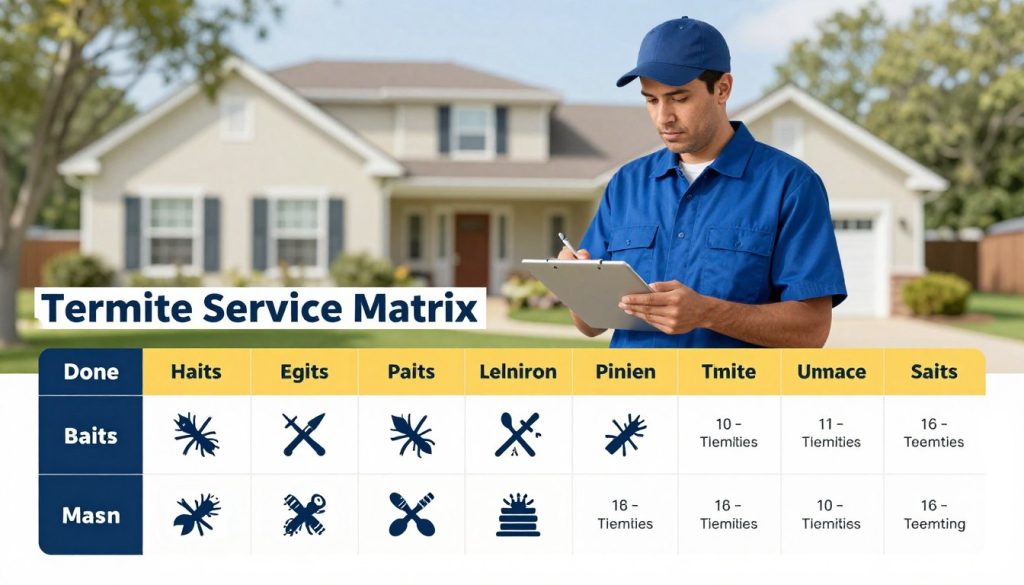
Recommended Treatment Intervals for Liquid Applications and Baiting Systems
Liquid termiticide protection may last from one to 10 years, depending on the label, soil, construction, and site conditions. Annual inspections can identify moisture, landscaping, flooding, or construction changes that affect coverage. Bait stations commonly need checks every six to 12 months so inspectors can review activity, bait use, and station condition.
| Pest service | Target customers | Recommended interval |
| Termite inspection | Homeowners and managers | At first sign, then annually |
| Liquid barrier | Owners and professionals | One to 10 years; inspect annually |
| Perimeter trench | Homeowners and managers | Up to 10 years, label dependent |
| Bait monitoring | Owners and managers | Every six to 12 months |
| Wood treatment | Homeowners and managers | Reassess annually |
Professional Services for Local Properties
Costs vary by structure size, termite species, access, damage, and selected products. Free shipping and shipping availability affect retail purchases, not professional service timing. For general reference, review this Virginia pest authority overview. A local professional pest team can match inspections, barriers, baits, and monitoring to Southwest Florida properties.
Prevention Practices to Enhance Product Longevity
Southwest Florida’s warmth, humidity, irrigation, and heavy rainfall can increase termite risk. These maintenance steps help protect a home, extend the performance of termite control products, and reduce moisture conditions that attract pests. Prevention supports professional treatment but cannot replace an inspection when termites are active.
How Can Homeowners Prevent Infestations Year-Round?
- Remove wood-to-soil contact: Keep siding, steps, stored lumber, and debris above the soil line.
- Control moisture: Repair plumbing leaks, A/C condensation problems, drainage issues, and roof leaks promptly.
- Maintain mulch clearance: Keep mulch and dense vegetation away from walls, foundation edges, and treatment zones.
- Keep vents unblocked: Ensure crawlspace and foundation air vents remain open to improve airflow and reduce damp wood.
- Inspect routinely: Watch for mud tubes, discarded wings, damaged wood, or recurring termites. Do not disturb a professional bait system or barrier, and follow every insecticide and termiticide label.
Free shipping and low shipping costs may make DIY products convenient, but they do not prevent an infestation or confirm treatment success. Contact CX Pest Solutions for professional pest control when signs continue or damage appears.
Conclusion: Choose Professional Termite Control Products in Southwest Florida
Retail products may kill exposed workers, but effective termite control depends on the species, colony location, home design, and application quality.
The right termite control products require professional inspection, installation, coverage, and monitoring. Liquid termiticides and baiting systems work differently, while drywood treatments must reach infested wood. Bait stations often need checks every six to 12 months, and liquid protection follows the product label and site conditions.
- Do not rely on surface sprays after finding mud tubes or damaged wood.
- Treat discarded wings and recurring activity as warning signs.
- Follow every insecticide label and avoid disturbing professional barriers.
Contact CX Pest Solutions for practical pest control and reliable subterranean termite protection. Learn more about termite warning signs on the CX Pest Solutions blog, then call 239-834-9837 or visit CX Pest Solutions to protect your home with professional-grade termite solutions in Cape Coral and Fort Myers. You can also view our Southwest Florida service area on Google Maps.